



How DPS Gaya Balances Academic Excellence with Holistic Development
DPS Gaya Team
Verified Author
Choosing the right school is one of the most important decisions a parent makes. Many parents in Gaya want a school that helps their child score well in examinations, but also grow into a confident, capable, and emotionally secure individual. This is where DPS Gaya holistic education stands out as an approach worth understanding.
In simple terms, DPS Gaya balances academic excellence with holistic development by combining structured, curiosity-driven classroom learning with sports, arts, life skills, and personality development, so that students grow intellectually, physically, emotionally, and socially at the same time.
This blog explains what holistic education really means, how it works alongside strong academics, and why a balanced learning environment matters for a child's exams, higher education, and future career. Whether you are exploring schooling options or simply want clarity on modern education, this guide offers a practical, parent-focused view of how such a balance is built at DPS Gaya.
What Does Holistic Education Mean in Modern Schooling?
Holistic education refers to an approach that develops a child across multiple dimensions — intellectual, physical, emotional, social, creative, and ethical — rather than focusing only on academic scores.
In a traditional model, success is often measured purely by marks and rank. A holistic model, on the other hand, treats academics as one important pillar among several. It gives equal attention to how a child thinks, communicates, handles emotions, works in a team, and treats others.
For parents evaluating a CBSE school in Gaya, this distinction matters. Board examinations and academic performance remain essential, but so does a child's ability to adapt, communicate, and lead — skills that are increasingly valued in higher education and the modern workplace.
DPS Gaya's Approach to Academic Excellence
Academic excellence at DPS Gaya is built on a structured CBSE curriculum, qualified teaching, and a learning environment designed to help students genuinely understand concepts rather than memorise them.
Delhi Public School Gaya follows the CBSE framework, which emphasises conceptual clarity, application-based learning, and continuous assessment. This structure prepares students not just for board examinations, but for competitive examinations and higher studies that require strong analytical foundations.
Strong academics at the school rest on a few consistent practices:
Well-planned lesson delivery aligned with CBSE guidelines
Regular assessments to track understanding, not just memory
Doubt-clearing support so students don't fall behind
Encouragement to ask questions and explore subjects beyond the textbook
This foundation ensures that quality education in Gaya is not just about covering the syllabus, but about building a genuine understanding that stays with students long after the exam is over.
How Classroom Learning Encourages Curiosity and Critical Thinking
Modern classrooms at the school are designed to move beyond one-way lecturing. Teachers use discussions, project work, and real-world examples to help students connect classroom concepts with everyday life.
This approach encourages several important skills:
Curiosity — students are encouraged to ask "why" and "how," not just "what"
Critical thinking — problems are broken down and analysed rather than solved by rote formulas
Creativity — assignments often allow multiple ways of arriving at an answer
Communication — classroom discussions and presentations help students express ideas clearly
Problem-solving — practical, scenario-based questions build applied thinking
When these skills are nurtured alongside subject knowledge, students are better prepared for both examinations and real-life decision-making.
The Role of Sports and Physical Education
Sports and academics in school go hand in hand, and physical education plays a central role in a child's holistic growth. Regular physical activity supports fitness, but its benefits extend well beyond the playground.
Participation in sports and physical education at DPS Gaya helps students build:
Discipline — through regular practice schedules and following rules of the game
Teamwork — by learning to collaborate with peers toward a shared goal
Resilience — by experiencing both wins and losses and learning from both
Leadership — through opportunities to captain teams or guide younger students
Physical fitness — supporting concentration, energy levels, and overall well-being
Children who are physically active tend to manage stress better and stay more focused during academic tasks, which is one reason physical education is treated as a core part of the school day rather than an optional add-on.
Arts, Culture, and Creative Expression
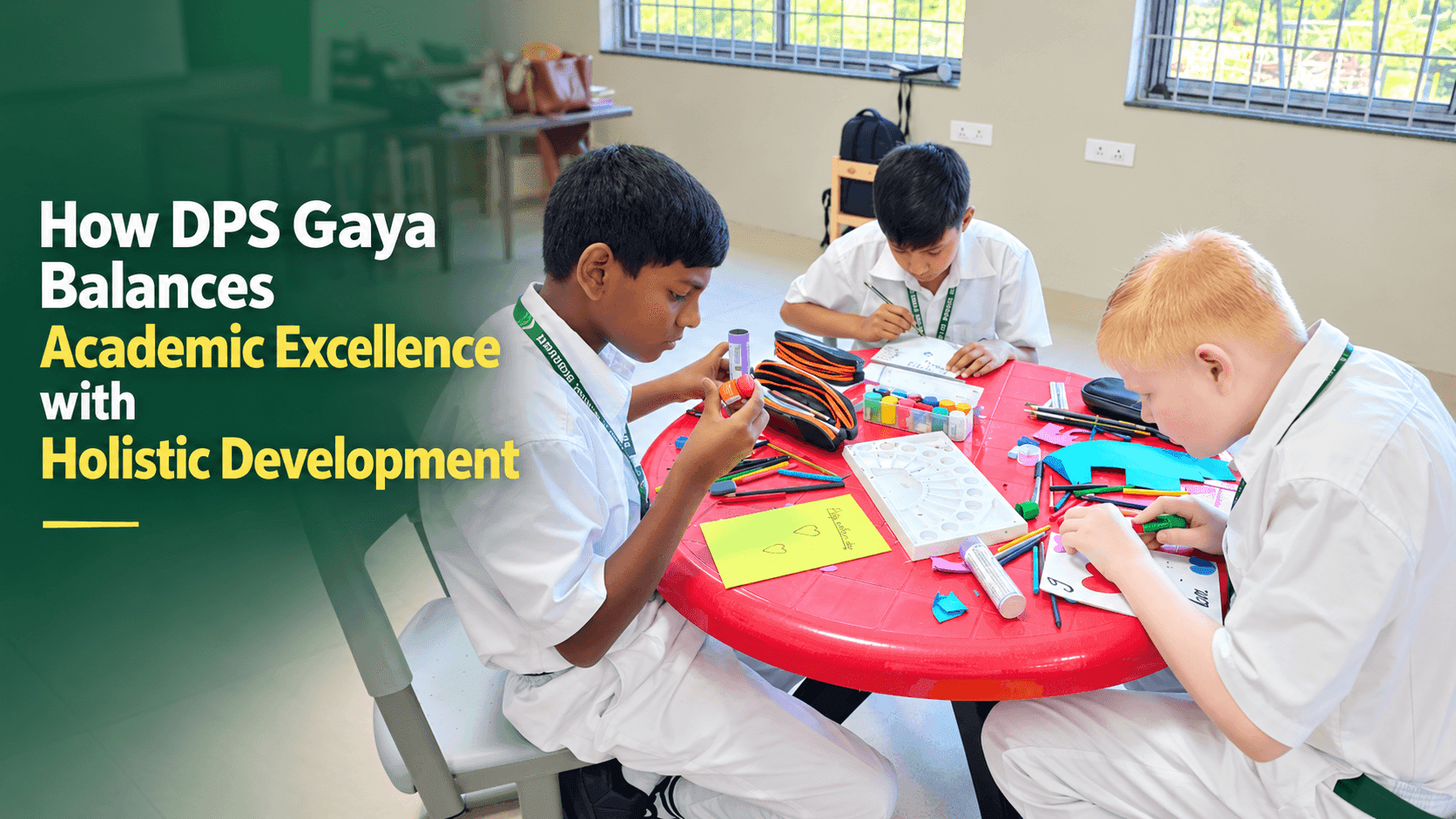
Extracurricular activities at DPS Gaya, including art, music, dance, and cultural programmes, give students an outlet to express themselves beyond textbooks and examinations.
Creative activities contribute meaningfully to a child's development:
Art and craft sessions build fine motor skills, patience, and visual thinking
Music and dance help students develop discipline, rhythm, and self-expression
Cultural events and competitions build stage confidence and public presence
School clubs allow students to pursue specific interests, from debate to science to literature, in a focused setting
Participating in inter-house competitions, annual functions, and cultural celebrations also teaches students how to plan, collaborate, and perform under a degree of pressure — skills that translate well into academic presentations and future professional settings.
Life Skills, Values, and Emotional Well-Being
Personality development for students goes beyond communication skills. It includes the ability to manage emotions, make ethical choices, and take responsibility for one's actions.
At school, this is nurtured through:
Communication skills developed through classroom interaction, presentations, and group activities
Emotional well-being supported by approachable teachers and a respectful classroom culture
Values and discipline reinforced through daily routines, assemblies, and behavioural expectations
Responsible citizenship encouraged through activities related to civic sense, environmental awareness, and community participation
These life skills matter because academic knowledge alone does not prepare a child for real-world situations. A student who can manage stress, communicate clearly, and act responsibly is better equipped to handle both examinations and life beyond school.
How Teachers Identify Individual Strengths
Every child learns differently, and teachers play a critical role in recognising these differences early. At Delhi Public School Gaya, teachers observe classroom participation, assessment patterns, and extracurricular involvement to understand where a student naturally excels and where they may need additional support.
This individual attention allows teachers to:
Encourage students toward subjects or activities where they show natural ability
Provide extra support to students who need more time with certain concepts
Balance academic pressure with confidence-building in non-academic areas
Communicate with parents about a child's strengths and areas for growth
This ongoing observation ensures that student development programs are not one-size-fits-all, but responsive to each child's pace and interests.
How Does DPS Gaya Balance Academics and Holistic Development?
DPS Gaya balances academics and holistic development by integrating structured CBSE-based classroom learning with sports, arts, cultural activities, and life-skills education within the regular school routine, ensuring that intellectual growth is supported alongside physical, emotional, and social development.
This balance is achieved through:
Time allocation that includes both academic periods and dedicated hours for sports, arts, and activities
Skill-based learning integrated into projects, presentations, and classroom discussions
Consistent teacher involvement across academic and non-academic areas
A school culture that values participation and effort, not only academic scores
Because both dimensions are built into the same school day rather than treated as separate tracks, students experience them as complementary parts of their overall education.
Preparing Students for Future Challenges
Academic knowledge and extracurricular exposure, together, prepare students for higher education, competitive examinations, and career paths that increasingly value adaptability alongside subject expertise.
A student who has strong academic grounding along with communication skills, teamwork experience, and emotional maturity is generally better prepared for:
University-level academic and social environments
Group projects and leadership roles in higher studies
Interviews and professional settings that assess soft skills
Managing pressure and setbacks constructively
This combined preparation reflects why many parents now look beyond marksheets when evaluating a school's overall value.
Why Consider a Balanced Education Model for Your Child
Parents searching for the best school in Gaya often weigh academic reputation alongside opportunities for all-round development of students. A balanced education model matters because it prepares children for more than just the next examination — it prepares them for the years that follow school as well.
When evaluating schools, parents may find it useful to consider:
Whether academics and extracurricular activities are both given consistent priority
How teachers support students with different learning needs
The range of sports, arts, and life-skills opportunities available
Whether the school environment supports emotional well-being, not just performance
A school that thoughtfully integrates these elements offers children a more complete foundation for both academic and personal growth.
Conclusion
Balancing academic excellence with holistic development is not about choosing one over the other — it is about recognising that both are essential to a child's growth. Delhi Public School Gaya approaches this balance by combining structured academics with sports, arts, life skills, and individual attention, so that students are prepared not only for examinations but for the wider challenges of life.
If you are exploring schooling options in Gaya, Bihar, and want to understand this approach in more detail, we encourage you to learn more about DPS Gaya or reach out to the school directly to discuss the admission process for your child.
Frequently Asked Questions
Holistic education is an approach that develops a child across multiple areas — intellectual, physical, emotional, social, and ethical — rather than focusing solely on academic performance. It aims to prepare students for both examinations and real-life situations.
DPS Gaya follows the CBSE curriculum with structured lesson planning, regular assessments, and doubt-clearing support. The focus is on helping students understand concepts clearly, building a strong foundation for board examinations and higher studies.
Extracurricular activities at DPS Gaya include sports, art, music, dance, cultural programmes, and school clubs. These activities support creativity, confidence, teamwork, and self-expression alongside regular academic learning.
Sports build physical fitness along with discipline, teamwork, resilience, and leadership. Regular participation in sports also helps students manage stress and stay focused, supporting their academic performance as well.
Life skills such as communication, emotional management, and responsible decision-making help students navigate real-world situations beyond the classroom. These skills complement academic knowledge and prepare students for higher education and future careers.
Parents seeking a CBSE school in Gaya that offers a balanced education model may consider DPS Gaya for its integration of structured academics with sports, arts, and life-skills development, aimed at supporting the all-round growth of each student.
Get in Touch
Still have questions? Fill out the form below and our team will get back to you shortly.