



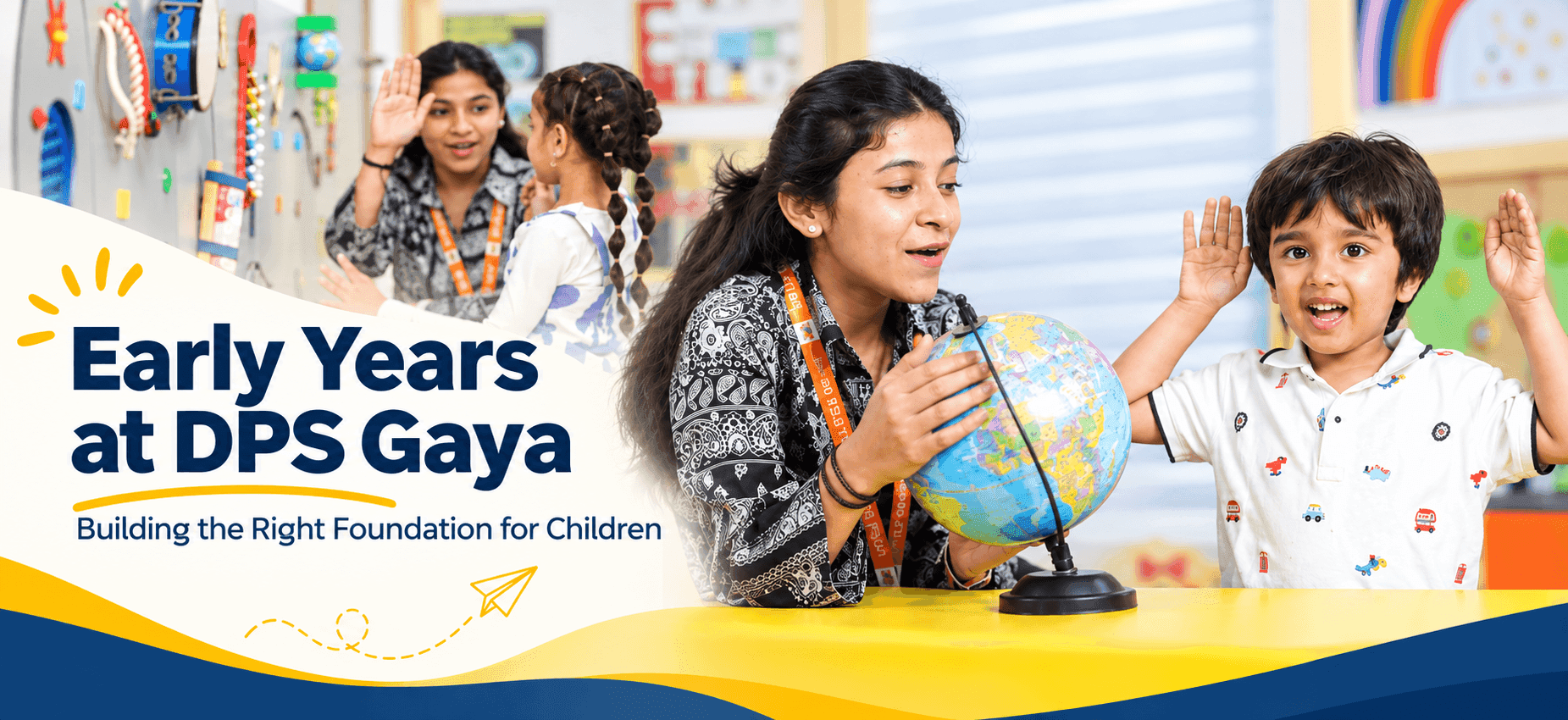
Early Years at DPS Gaya: Building the Right Foundation for Children
DPS Gaya Team
Verified Author
The early years of a child's life, roughly from age two to seven, form the foundation on which all later learning is built. During this stage, a child's brain develops faster than at any other point in life, shaping how they think, communicate, and relate to others. Quality Early Years Education at DPS Gaya aims to support this stage by nurturing curiosity, confidence, and emotional security alongside age-appropriate learning. For parents in Gaya thinking about where to begin their child's educational journey, understanding what the early years truly involve can make the decision easier.
This blog looks at why these years matter so much, what a genuinely strong foundation looks like, and how parents can support their child both at school and at home.
Why Are the Early Years Important in a Child's Development?
The early years matter because this is when a child's brain forms connections at its fastest rate, shaping cognitive, emotional, social, physical, and language abilities all at once. Experiences during this window influence how a child approaches learning later in life. A calm, encouraging environment in these years tends to build habits of curiosity and confidence that carry forward.
Development at this stage happens across several connected areas:
Cognitive development: Problem-solving, memory, attention, and early reasoning skills begin to take shape through everyday exploration.
Language development: Vocabulary, listening skills, and the ability to express thoughts grow rapidly through conversation and stories.
Social development: Children learn to share, cooperate, and understand others' feelings through group play and guided interaction.
Emotional development: Recognising and managing emotions starts here, supported by secure, caring relationships.
Physical development: Fine and gross motor skills develop through movement, play, and hands-on activities.
Because these areas are so closely linked, a gap in one area can affect progress in another. This is why early years programmes are designed to nurture the whole child rather than focus on a single skill.
What Does a Strong Foundation in Early Education Mean?
A strong foundation in early education means far more than knowing letters and numbers early. It refers to a child's overall readiness to learn, including their curiosity, confidence, independence, communication skills, and emotional security. These qualities matter as much as, if not more than, early academic knowledge.
Children with a genuinely strong foundation tend to:
Ask questions and explore new ideas without fear of getting things wrong
Express their thoughts and needs clearly
Manage small challenges and frustrations with growing independence
Interact comfortably with peers and adults
Approach new learning situations with interest rather than anxiety
A foundation built this way tends to support smoother transitions into structured primary schooling, because the child is not just academically ready but also socially and emotionally prepared.
How Does Early Years Education at DPS Gaya Support Young Learners?
Early Years Education at DPS Gaya is designed around the idea that young children learn best in a nurturing, age-appropriate, and child-centred environment. The focus is on creating a space where children feel safe, valued, and encouraged to explore at their own pace.
Rather than pushing early learners toward formal, exam-style instruction, the approach at this stage recognises that young children learn through experience, interaction, and gentle guidance from supportive educators. This allows each child's natural curiosity to guide part of their learning journey, while teachers provide structure, encouragement, and consistency.
For families exploring DPS Gaya Early Years options, the school's admissions team can share more specific details about the programme structure, classroom approach, and daily routines.
The Role of Play-Based Learning in Early Childhood
Play-based learning matters because young children absorb concepts most effectively when they are actively engaged rather than passively instructed. Through stories, games, art, music, movement, and exploration, children practise skills without even realising they are learning.
Play supports development in several important ways:
Problem-solving: Building blocks, puzzles, and pretend play encourage children to think through challenges.
Imagination: Role play and storytelling help children explore ideas and possibilities.
Communication: Group games naturally encourage turn-taking, listening, and expressing ideas.
Collaboration: Shared play teaches children to negotiate, cooperate, and work toward common goals.
This is why play-based learning in Gaya, and in early years programmes generally, is treated as a core part of the curriculum rather than an occasional activity.
Developing Language and Communication Skills
Language and communication skills develop through everyday conversation, storytelling, and opportunities for self-expression, not through isolated drills. Listening to stories, singing rhymes, and having simple back-and-forth conversations all strengthen a child's vocabulary and confidence in speaking.
Parents and teachers can encourage this development by:
Asking open-ended questions rather than ones with a single correct answer
Reading aloud regularly and discussing the story afterward
Giving children time to finish their thoughts without rushing them
Introducing new words naturally during daily routines
Strong communication skills at this stage make it easier for children to express their needs, form friendships, and participate confidently in classroom discussions later on.
Building Confidence, Independence and Social Skills
Confidence and independence grow when children are given small, manageable responsibilities and encouraged rather than corrected too quickly. Simple routines, like packing their own bag or choosing between two activities, help children feel capable and trusted.
Social skills develop alongside this through:
Structured opportunities for teamwork, such as group projects or shared play
Learning to share materials and take turns
Taking on small responsibilities, like tidying up after an activity
Receiving positive encouragement rather than harsh criticism
These experiences prepare children for the more structured social and academic expectations of later school life, where independence and cooperation become increasingly important.
Supporting Creativity and Curiosity
Creativity and curiosity matter because they drive a child's natural desire to explore, question, and make sense of the world around them. Encouraging children to ask "why" and "how," rather than simply giving them answers, helps them develop independent thinking.
Practical ways this shows up in early learning include:
Open-ended art activities where there is no single "correct" outcome
Simple science-style exploration, such as observing how plants grow
Imaginative play, like pretending to run a shop or a kitchen
Encouraging children to describe their own ideas and creations
When curiosity is nurtured rather than restricted, children tend to approach new academic challenges with greater interest and less fear of failure.
Emotional Well-Being and a Sense of Belonging
Emotional well-being in the early years depends heavily on secure relationships and a sense of belonging within the classroom. When children feel safe and accepted, they are far more willing to try new things, ask for help, and engage with learning.
Supportive early years environments generally help children:
Recognise and name their own emotions
Understand that feelings like frustration or sadness are normal
Express emotions in appropriate ways rather than suppressing them
Build trust with teachers and classmates over time
This emotional grounding is closely tied to holistic early childhood development, since children who feel emotionally secure are better able to focus, socialise, and learn.
How Parents Can Support Early Learning at Home
Parents play an equally important role in reinforcing what children experience at school. Consistency between home and school routines helps children feel more settled and supported.
Some practical ways to support early learning at home include:
Reading together daily, even for just ten to fifteen minutes
Encouraging open-ended questions, such as "What do you think will happen next?"
Maintaining healthy routines around sleep, meals, and playtime
Offering age-appropriate responsibilities, like putting away toys
Limiting passive screen time in favour of interactive or creative activities
Encouraging outdoor and creative play, which supports physical and imaginative development
Maintaining regular communication with teachers to stay informed about progress and areas needing support
These small, consistent habits often make a noticeable difference in how confidently a child approaches learning.
What Should Parents Look for in an Early Years Programme in Gaya?
Choosing the right early years setting is one of the more important decisions parents make, and it helps to know what to look for beyond a school's reputation alone. A good early learning program in Gaya should be evaluated on the actual daily experience it offers a child.
Consider checking for:
Child-centred learning rather than a rigid, exam-focused approach
Age-appropriate activities suited to each stage of development
Qualified and supportive educators who understand early childhood needs
Attention to emotional and physical safety throughout the day
Genuine opportunities for play and hands-on exploration
Open and regular parent-school communication
Attention to each child's individual pace of development
A balanced approach that prepares children for future learning without rushing them
Visiting the school, observing a classroom if possible, and speaking with current parents can offer useful, first-hand insight. You can review the admission procedure at DPS Gaya to understand the steps involved.
Key Takeaways for Parents
The early years, from roughly age two to seven, are a critical window for cognitive, language, social, emotional, and physical development.
A strong foundation includes curiosity, confidence, independence, and communication, not just early academic skills.
Play-based learning supports problem-solving, imagination, and social skills in ways formal instruction alone cannot.
Language development grows through everyday conversation, storytelling, and open-ended questions.
Emotional security and a sense of belonging directly affect how willing a child is to learn and engage.
Parents can reinforce learning at home through reading, routines, outdoor play, and reduced screen time.
When evaluating an early years programme in Gaya, look closely at the daily learning environment, not just the school's overall reputation.
Conclusion
The early years lay the groundwork for how children learn, communicate, and relate to the world around them for years to come. Getting this stage right matters more than many parents initially realise, because the habits and confidence built now tend to shape a child's approach to school life well into the future. Early Years Education at DPS Gaya focuses on supporting this stage through a nurturing, child-centred environment that values curiosity and emotional security alongside age-appropriate learning.
If you are exploring early years or preschool options for your child in Gaya, it may help to learn more about the programme structure and daily experience firsthand. Contact DPS Gaya to speak with the admissions team and take the next step toward your child's early learning journey.
Frequently Asked Questions
The early years are when a child's brain develops fastest, shaping cognitive, language, social, emotional, and physical skills all at once. Experiences during this stage influence how a child approaches learning later on. A supportive, engaging environment during these years helps build curiosity, confidence, and emotional security that carry forward into primary school and beyond.
Early years education typically includes play-based learning, language and communication development, social skill-building, emotional support, and early exposure to numbers, letters, and creative activities. It focuses on holistic development rather than formal academics alone, helping children build curiosity, confidence, and independence alongside foundational cognitive and physical skills.
Most children begin preschool or early years education between the ages of two and three, though this can vary based on the child's readiness and family circumstances. The right age often depends on a child's comfort with separation, basic communication skills, and general development, rather than age alone.
Play-based learning helps children develop problem-solving skills, imagination, communication, and collaboration in a natural, engaging way. Through stories, games, art, and group activities, children practise thinking and social skills without formal instruction. This approach supports learning that feels enjoyable rather than pressured, which improves long-term engagement.
Parents should look beyond reputation and assess the daily learning environment, including child-centred teaching, qualified educators, safety, and opportunities for play and exploration. Visiting the school, observing a classroom, and speaking with current parents can provide valuable insight. Communication between parents and teachers is also an important factor to consider.
Early education prepares children for primary school by building academic readiness alongside social, emotional, and communication skills. Children learn to follow routines, work with peers, express themselves clearly, and manage small challenges independently. This combination makes the transition to more structured schooling smoother and less overwhelming.
Get in Touch
Still have questions? Fill out the form below and our team will get back to you shortly.