



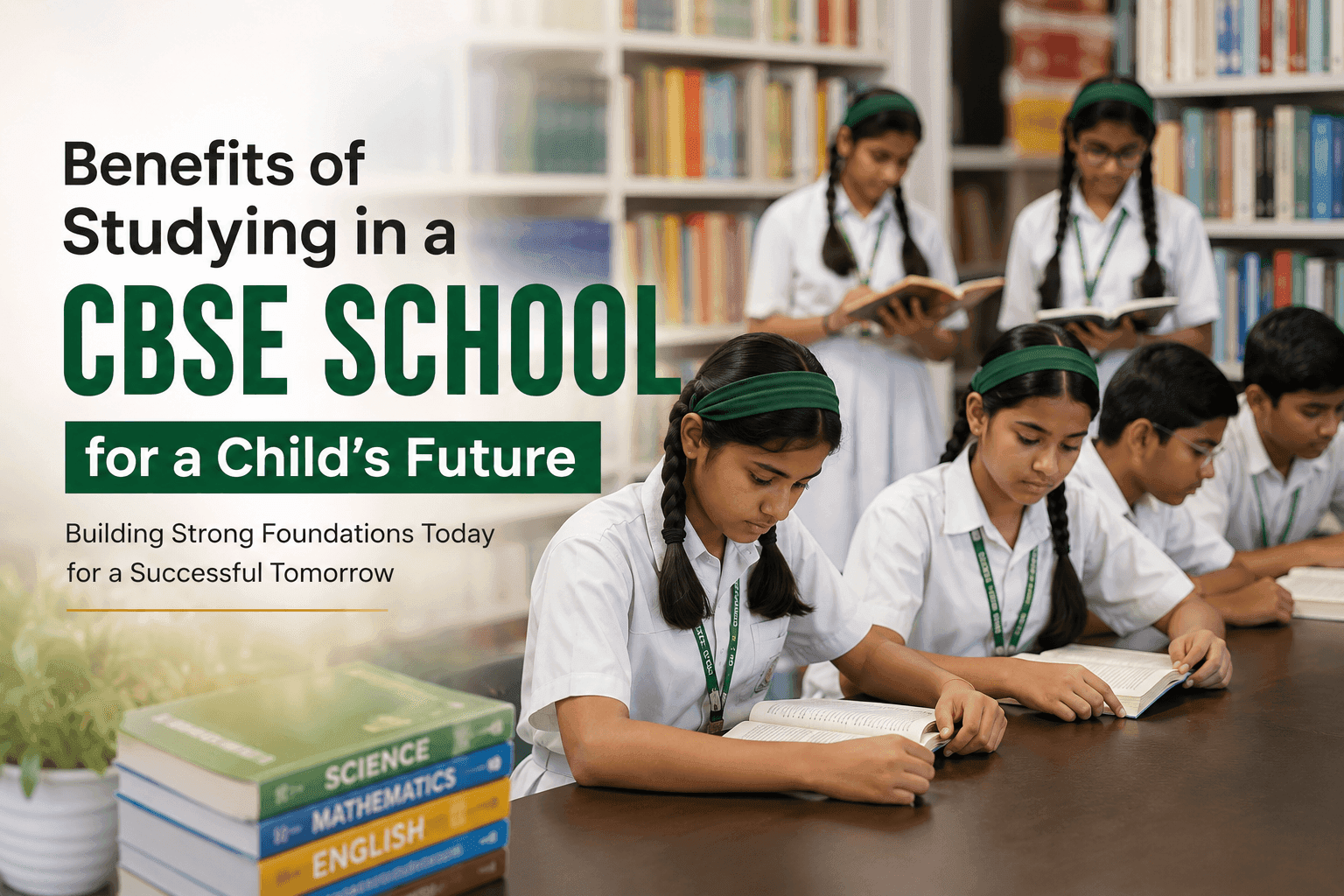
Benefits of Studying in a CBSE School for a Child's Future
DPS Gaya Team
Verified Author
Choosing the right school board is one of the most important decisions a parent makes for their child's education. The benefits of studying in a CBSE school go beyond textbooks and examinations; they shape how a child thinks, learns and prepares for the future. A CBSE education offers a structured curriculum, strong academic foundation and consistent evaluation pattern that helps students build knowledge step by step. It also supports skill development in areas like communication, critical thinking and problem-solving, which are increasingly valued in higher education and competitive careers. For parents evaluating schooling options, understanding these advantages can make the decision clearer and more confident.
Main Insights
CBSE offers a nationally recognised, structured curriculum that supports consistent learning across India.
The board's emphasis on conceptual understanding helps students prepare better for competitive examinations like JEE and NEET.
CBSE education encourages holistic development through academics, sports and co-curricular activities.
A common syllabus makes school transfers easier for transferable or relocating families.
CBSE schooling opens up wider opportunities for higher education and future career paths.
What Is the CBSE Curriculum?
The CBSE curriculum is a standardised course of study followed by schools affiliated with the Central Board of Secondary Education, one of India's largest and most widely recognised school boards. It is designed to provide uniform academic standards across the country.
The curriculum covers core subjects such as Mathematics, Science, Social Science, Languages and, at the senior level, specialised streams like Commerce and Humanities. It is updated periodically by the board to stay aligned with national education policies and evolving academic requirements. Parents can explore the class-wise CBSE syllabus followed at DPS Gaya to understand how subjects progress from one grade to the next.
What Are the Main Benefits of Studying in a CBSE School?
The main benefits of studying in a CBSE school include a structured curriculum, strong subject foundation, better competitive exam preparation, practical learning methods and easier transferability across India. Together, these advantages support both academic performance and long-term personal growth.
Each of these benefits works together to create a well-rounded learning experience. Below is a closer look at what makes CBSE education valuable for children.
A Structured and Nationally Recognised Curriculum
CBSE follows a well-defined, sequential curriculum that is recognised by schools, universities and employers across India. This structure helps children build knowledge systematically from one grade to the next.
Because the syllabus is standardised nationally, students are assessed using consistent academic benchmarks regardless of which state or city they study in. Schools that follow a comprehensive CBSE curriculum aim to give students a well-rounded academic base rather than narrow, exam-only preparation, so families can trust that the syllabus aligns with recognised national standards.
Strong Foundation in Core Academic Subjects
A strong foundation in core subjects is one of the most direct academic benefits of CBSE schools. The curriculum places clear emphasis on Mathematics, Science and Language skills from the early years.
This early focus helps children develop logical reasoning and analytical thinking, which supports learning in higher classes. Subjects are introduced with age-appropriate depth, ensuring that concepts are neither oversimplified nor overly complex for a child's learning stage.
Better Preparation for Competitive Examinations
CBSE education is closely aligned with the syllabus followed in major competitive examinations such as JEE, NEET and various entrance tests. This alignment gives CBSE students a familiar academic base when they begin exam preparation.
Many national-level entrance exams design their question patterns around NCERT textbooks, which CBSE schools primarily use. As a result, students often find it easier to transition into focused competitive exam preparation without needing to relearn foundational concepts from a different syllabus.
Focus on Conceptual Understanding and Practical Learning
CBSE's teaching approach emphasises understanding concepts rather than memorising information. This method encourages students to apply what they learn rather than simply reproduce it in examinations.
Practical learning is supported through activity-based lessons, laboratory work and application-oriented assessments. A student-focused teaching methodology helps children connect classroom learning with real-world situations, which strengthens retention and builds problem-solving skills over time. This approach is central to how a CBSE school in Gaya delivers day-to-day classroom instruction.
Development of Communication, Creativity and Critical Thinking
CBSE education encourages the development of communication, creativity and critical thinking alongside academic knowledge. Classroom activities such as debates, projects and presentations give students regular opportunities to express ideas clearly.
These skills are not incidental; they are built into the curriculum through group work, oral assessments and project-based learning. Over time, this well-rounded approach helps children become confident communicators, both in academic settings and beyond.
Holistic Development Through Sports and Co-Curricular Activities
CBSE schools generally place importance on holistic development, encouraging participation in sports, arts and co-curricular activities alongside academics. This balanced approach supports physical fitness, teamwork and personality development.
Co-curricular involvement also helps children discover interests and talents outside the classroom. Access to well-planned modern school facilities makes this kind of regular participation possible, supporting discipline, time management and social skills that contribute to long-term personal growth.
Easier School Transfers Across India
One practical advantage of CBSE education is the ease of transferring schools within India. Because the curriculum and academic calendar are largely standardised across CBSE-affiliated schools, students moving between cities face fewer disruptions in their studies.
This is especially relevant for families with transferable jobs, such as those in government service, defence or corporate roles requiring relocation. A child moving from one CBSE school to another generally continues with a similar syllabus and grading pattern, reducing the academic adjustment period.
Wider Higher-Education and Career Opportunities
CBSE education supports access to a wide range of higher-education and career pathways, both within India and internationally. Its recognition by universities and its alignment with national entrance exams give students flexibility when choosing future academic directions.
The board's broad-based curriculum also allows students to explore multiple streams, including Science, Commerce and Humanities, before committing to a specific career path. This flexibility can be valuable during the crucial transition from school to higher education.
How Does CBSE Education Prepare Children for the Future?
CBSE education prepares children for the future by combining strong academic fundamentals with skill development in communication, critical thinking and adaptability. This dual focus helps students manage both academic challenges and real-world situations.
The relationship between structured learning and future readiness is direct: a curriculum that builds conceptual clarity supports easier learning in higher classes, which in turn supports performance in competitive examinations and higher education. Skills like teamwork, creativity and problem-solving, developed through co-curricular participation, complement this academic base and prepare students for varied career environments.
Why Should Parents Consider a CBSE School in Gaya?
Parents in Gaya should consider a CBSE school because it offers a nationally recognised curriculum, structured academic progression and better alignment with competitive examinations, all within a familiar regional setting. This combination supports both local convenience and national academic standards.
For families in Gaya, choosing a CBSE school in Gaya means access to a curriculum that is consistent with schools across the country, which is particularly useful if future relocation is a possibility. It also ensures that children are prepared using the same academic framework followed by many top-performing schools nationally, without needing to travel outside the city for quality education.
How DPS Gaya Supports Future-Ready Learning
Delhi Public School Gaya is built around the CBSE framework, with a focus on helping students grow academically, personally and socially. The school's approach combines structured classroom learning with opportunities for practical application, creativity and skill-building.
Academic learning at DPS Gaya follows the CBSE framework covered earlier, with core subjects taught in a sequential, age-appropriate manner. Alongside this, the school's teaching methodology encourages conceptual understanding rather than rote learning, helping students build confidence in applying what they learn.
Beyond academics, DPS Gaya encourages participation in sports and co-curricular activities to support discipline, teamwork and creativity. These experiences complement classroom learning and contribute to a child's overall personality development.
Parents interested in enrolling their child can review the DPS Gaya admission procedure for detailed guidance on the process, timelines and requirements.
Conclusion
The benefits of studying in a CBSE school extend well beyond examination results. From a structured, nationally recognised curriculum to better preparation for competitive exams and holistic personal development, CBSE education offers a well-rounded foundation for a child's future. For parents in Gaya seeking a school that combines academic rigour with practical skill development, exploring what a CBSE school in Gaya has to offer is a meaningful first step. Visit the DPS Gaya homepage to learn more about the curriculum, teaching approach and admission process.
Frequently Asked Questions
The main benefits include a structured, nationally recognised curriculum, strong foundation in core subjects, better alignment with competitive exam patterns, and emphasis on conceptual understanding. CBSE schools also support holistic development through sports and co-curricular activities, along with easier transferability for relocating families.
Yes, CBSE is closely aligned with the syllabus used in major competitive exams like JEE and NEET, as these exams often draw questions from NCERT textbooks. This alignment helps CBSE students transition into focused exam preparation with a familiar academic foundation.
The CBSE curriculum supports a child's future by building strong academic fundamentals alongside practical skills like critical thinking and communication. This combination helps students perform well in higher education, competitive examinations and varied career paths after school.
CBSE can be a practical choice for families who may relocate, since its standardised curriculum and academic calendar are followed across most CBSE-affiliated schools in India. This reduces disruption when a child needs to transfer schools due to a change in city.
Parents may consider DPS Gaya for its CBSE-based curriculum, student-focused teaching methodology and emphasis on holistic development through academics, sports and co-curricular activities. The school supports structured, future-ready learning within a local Gaya setting.
Get in Touch
Still have questions? Fill out the form below and our team will get back to you shortly.