



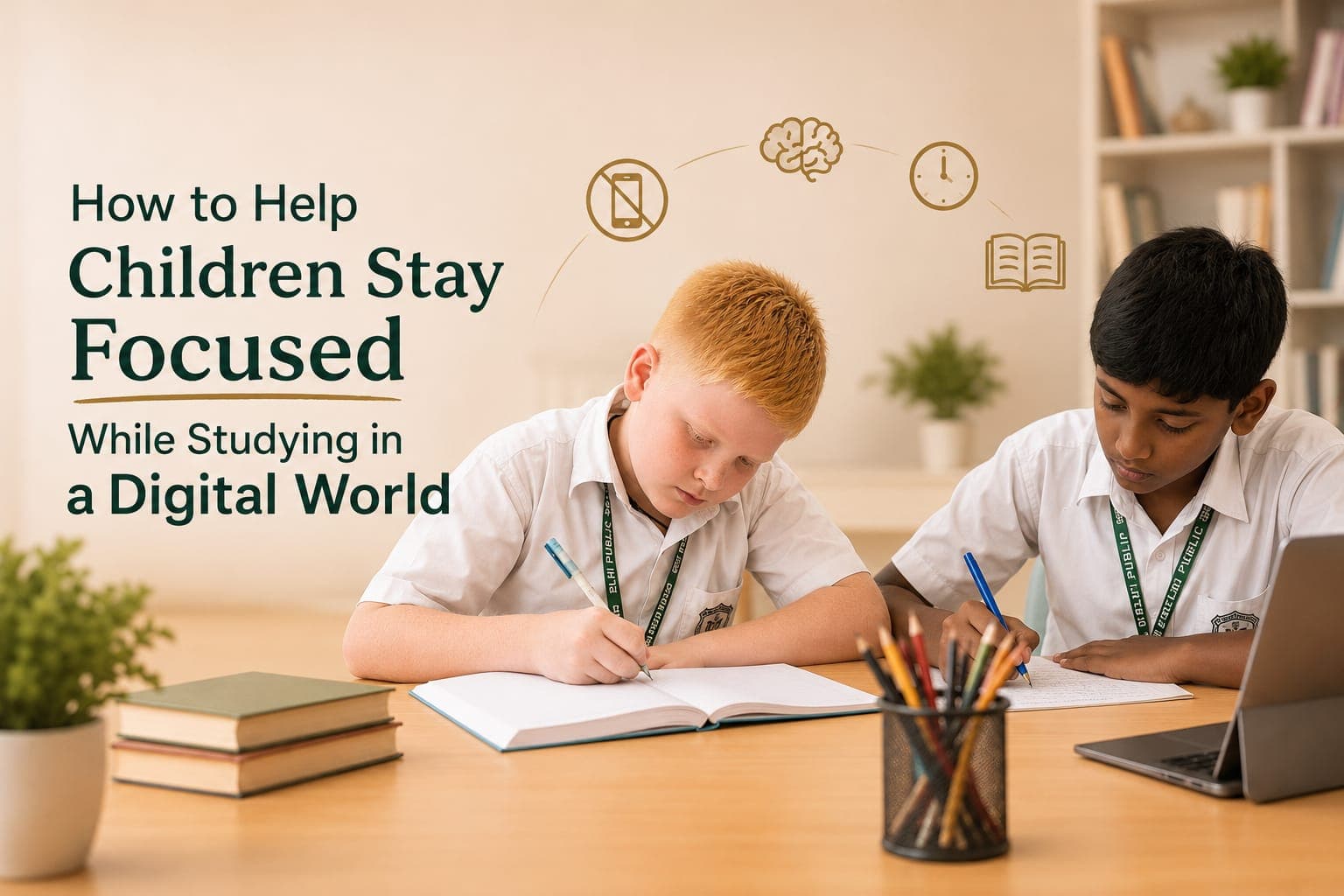
How to Help Children Stay Focused While Studying in a Digital World
DPS Gaya Team
Verified Author
Every parent knows the scene. Your child sits down with their books, opens a notebook, and within minutes a phone buzzes, a game notification pops up, or a sibling's tablet plays a video in the background. The pencil stops moving. Ten minutes later, studying still hasn't really started.
This is not a sign of a "bad" student or a lazy child. It's what happens when growing minds meet an environment full of quick, colourful, constantly-changing digital stimulation. Phones, games, and videos are built to capture attention instantly, while textbooks ask for slower, sustained focus. That's a hard contest for any child to win alone.
The good news is that how to improve concentration in children is not a mystery. It comes down to a few practical shifts: a distraction-free study space, a predictable routine, manageable study sessions, healthy screen habits, enough sleep, and encouragement along the way. None of this requires banning technology altogether — it requires helping children use it more intentionally, while building the study habits that let focus grow over time.
This guide walks through why children get distracted, how screen time plays a role, and exactly what parents can do at home to help.
Why Are Children Getting Distracted While Studying?
Children lose focus while studying for many reasons, and screens are only part of the picture. Common causes include mobile notifications, gaming, social media, short videos, an unstructured schedule, poor sleep, hunger, a noisy environment, and subjects they find difficult or boring.
A child distracted while studying is often responding to their environment rather than simply "not trying." A phone buzzing on the desk, a television playing in the next room, or an app icon showing a red notification badge are all small interruptions that add up quickly.
Some of the most common triggers include:
Notifications from messaging or social apps
Games left open or easily accessible
Short-form videos designed to be watched one after another
Switching between multiple apps or tabs while studying
A messy or shared study space
Skipping meals or studying while tired
Subjects that feel repetitive, confusing, or overwhelming
Long, unbroken study sessions with no rest
Digital distractions for students tend to be more disruptive than older distractions like noise or daydreaming, because apps and games are specifically designed to pull attention back again and again. Recognising this helps parents respond with structure and support instead of frustration.
How Does Screen Time Affect Concentration in Children?
Screen time itself is not automatically harmful, but the way it's used can affect a child's ability to concentrate. Frequent notifications, rapid content switching, and entertainment-driven screen use can make it harder for some children to settle into slower, sustained academic tasks.
Screen time and concentration in children are connected mainly through habit and pacing. Apps, games, and short videos are built around quick rewards and constant novelty. Studying, by contrast, asks a child to stay engaged with one task for several minutes at a time. A child who spends most of their screen time jumping between fast-paced content may find it genuinely harder to shift into that slower academic mode.
Excessive evening screen use can also disrupt sleep, and a tired child naturally struggles to concentrate the next day. Multitasking between a video and homework divides attention rather than truly saving time, even though it can feel efficient in the moment.
None of this means digital devices are "destroying" attention. It means unstructured, entertainment-heavy screen use, especially close to study time or bedtime, makes focus more difficult — and that this is something parents can address with a few consistent habits.
How to Improve Concentration in Children
Parents can improve concentration in children by creating a distraction-free study space, following a consistent routine, breaking study time into manageable sessions, setting clear goals, limiting unstructured screen time, and supporting healthy sleep and physical activity. Concentration also improves gradually with practice, patience, and encouragement rather than instant fixes.
Below are practical, realistic strategies parents can start using at home.
1. Create a Distraction-Free Study Space
A calm, consistent study spot makes it far easier for a child to settle down and stay on task. Small adjustments to the environment often help more than repeated reminders to "concentrate."
Try to:
Keep phones out of the study area during study time
Turn off non-essential notifications on any nearby device
Keep the television off during study hours
Maintain a clean, uncluttered desk
Keep only the books and materials needed for that session nearby
Use the same location for studying each day so it becomes associated with focus
This kind of setup directly supports how to avoid distractions while studying, because it removes temptation before it becomes a decision your child has to keep making.
2. Establish a Consistent Study Routine
A predictable study time reduces the daily negotiation over "when" to start studying, which is often where distraction begins. When studying happens at roughly the same time each day, children need less willpower to begin.
A simple rhythm many families find useful is:
Study → Short Break → Study → Recreation
Keep individual study blocks realistic for your child's age rather than unusually long. A routine that's easy to follow consistently works better than an ambitious one that gets abandoned after a few days.
3. Break Study Time Into Smaller Sessions
Younger children, in particular, often find it difficult to concentrate for long, uninterrupted stretches. Instead of one long session, split study time into smaller, focused chunks with short breaks in between.
Between sessions, a few minutes of stretching, drinking water, or simply stepping away from the desk helps the mind reset. This approach keeps energy and attention higher through the full study period, rather than letting focus fade steadily over an hour or more.
4. Set Clear Goals Before Every Study Session
Vague instructions often lead to vague effort. "Study science" gives a child no clear sense of when the task is done, which makes it easier to drift toward a phone or game instead.
A clearer target works better:
Specific, achievable goals give each session a defined start and end point. This makes studying feel more manageable and gives your child a genuine sense of progress once it's done.
5. Reduce Unnecessary Screen Time
Reducing screen time doesn't mean removing devices entirely — it means making screen use more intentional, especially around study and rest periods.
Practical ways to manage this include:
Device-free meals as a family habit
Device-free study sessions, with phones kept in another room
Charging phones outside the bedroom overnight
Setting a fixed, agreed window for recreational screen time
Encouraging outdoor play, reading, sports, or creative hobbies as alternatives
These habits support how to reduce screen time for kids without framing technology itself as the enemy. The goal is balance, not restriction for its own sake.
6. Use Technology as a Learning Tool
Not all screen time works against concentration. Used intentionally, digital tools can support learning rather than compete with it.
This might include educational videos, interactive learning platforms, digital libraries, practice quizzes, research for school projects, or well-designed learning apps. The difference lies in purposeful screen time, where a child is actively engaging with content toward a goal, versus passive digital consumption, where content is simply consumed one piece after another with little effort involved.
Helping children notice this difference themselves, over time, is part of building genuine digital wellbeing.
7. Encourage Physical Activity
Movement gives the mind a genuine break from academic effort. Outdoor play, sports, walking, or even simple stretching between study sessions can help a child return to their books feeling more alert rather than restless.
Regular physical activity is generally associated with better mood and energy levels in children, which in turn can make it easier to settle back into focused work. It doesn't need to be intense — consistency matters more than intensity here.
8. Prioritize Healthy Sleep
Tired children often struggle to sustain attention, no matter how motivated they are. Sleep plays a direct role in a child's ability to concentrate the next day.
A few habits that help protect sleep quality:
Keeping a regular sleep and wake schedule, including on weekends
Reducing screen use in the hour or so before bedtime
Building a calm, comfortable bedtime routine
Avoiding late-night gaming or scrolling, which can delay sleep and affect its quality
Good sleep is one of the simplest, most underrated tools for better concentration.
9. Make Learning More Interactive
Passive reading isn't always the most engaging way to study, especially for children who find it hard to sit still. Interactive methods can make learning feel less like a chore and more like an activity.
Consider flashcards, mind maps, educational games, practice questions, real-world examples, short discussions, simple experiments, visual aids, or asking your child to teach a concept back to you. These approaches are often part of how to increase concentration in kids, because active engagement naturally holds attention better than passive repetition.
10. Teach Children to Focus on One Task at a Time
Studying while also texting, watching a video, or checking notifications divides attention rather than saving time. Even brief interruptions can take several minutes to fully recover from, since the mind has to re-settle into the original task each time.
Gently introducing the idea of single-tasking — one subject, one task, one block of time — helps children build the habit of staying with something until it's genuinely finished, rather than skimming between several things at once.
11. Appreciate Effort and Progress
Encouragement plays a real role in building better study habits. Recognising effort, not just results, helps children stay motivated to keep trying.
Consider acknowledging when your child:
Completes a full study session without prompting
Sticks to the routine for the week
Manages to stay away from distractions during a session
Finishes an assignment independently
Shows even small improvement in focus over time
This kind of recognition builds confidence and makes the next study session easier to start.
How Can Parents Help Children Focus on Studies?
Parents can help children focus on studies by modelling healthy device habits, setting clear family screen rules, maintaining consistent routines, and involving children in planning their own study time rather than constantly supervising them. Encouragement and consistency matter more than strict control.
A few ways this plays out at home:
Model healthy device use. Children notice when parents check phones constantly, even during family time. Leading by example makes household rules feel fair rather than one-sided.
Set family screen rules together, such as device-free meals or no phones during homework, so the expectation applies to everyone, not just the child.
Keep routines consistent so studying becomes a predictable part of the day rather than a daily negotiation.
Ask your child what distracts them. Their own awareness of their triggers is often more useful than assumptions.
Help them plan rather than hover. A short planning conversation before study time builds independence better than constant checking-in.
Celebrate improvement, however small, and avoid comparing siblings or classmates, which tends to reduce motivation rather than build it.
How to Improve Kids' Attention Span Gradually
Attention span, like any skill, develops with regular practice rather than overnight. How to improve kids attention span is really a question about steady, small habits repeated consistently over weeks and months.
Activities that can help build this gradually include:
Reading for slightly longer periods over time
Puzzles and brain teasers
Drawing or other focused creative work
Building or construction activities, such as blocks or models
Board games that require turn-taking and patience
Simple mindfulness or breathing exercises
Memory games
Periods of independent play or study without adult direction
Regular outdoor activity
Progress here is usually slow and steady rather than immediate, and that's normal. Small, consistent practice tends to produce more lasting results than occasional, intense effort.
Signs Your Child's Digital Habits May Need Adjustment
Occasional distraction is a normal part of childhood, and no child concentrates perfectly all the time. However, a few recurring patterns may suggest it's worth paying closer attention to screen habits at home:
Constantly checking the phone during homework time
Difficulty completing tasks that used to be manageable
Staying online or gaming late into the night
Becoming unusually restless or irritable without a device nearby
Frequently switching back and forth between study and entertainment
Repeatedly delaying homework in favour of games or videos
Poor or disrupted sleep linked to screen use
If several of these patterns show up regularly rather than occasionally, it may help to revisit study routines and screen boundaries together as a family — and, if concerns continue, to speak with your child's teacher or school counsellor for additional support.
A Simple Digital Study Routine Parents Can Try
Structure often makes the biggest difference. Here's a simple, practical routine many families adapt to their own schedule:
Before studying: Clear the desk, silence notifications, and decide together what the session's goal is.
During studying: Focus on one subject or task for a manageable, agreed period of time.
During the break: Stretch, walk, drink water, or rest — rather than immediately reaching for a screen.
After studying: Briefly review what was completed, then allow planned recreational time as a natural reward.
This kind of before–during–after structure gives each study session a clear shape, which makes it easier for children to know what's expected and when they're done.
Role of Schools in Developing Healthy Digital Habits
Parents don't have to manage this alone — schools play an important part too. Structured classroom routines, digital literacy lessons, and responsible technology guidelines all help children build healthier habits beyond the home.
Schools can support focus and healthy digital habits through:
Structured classroom and homework routines
Digital literacy and responsible technology use taught as part of the curriculum
Interactive, engaging teaching methods that hold attention naturally
Sports and extracurricular activities that balance screen-heavy time
Time management skills built into daily school life
Opportunities for independent learning and problem-solving
Student counselling and mentoring support when needed
Open communication between parents and teachers
When home and school reinforce similar habits, children tend to adapt to them more easily.
How DPS Gaya Supports Focused and Responsible Learners
At DPS Gaya, the aim is to nurture students who can manage both academics and technology responsibly. A balanced learning environment — one that values academic discipline alongside curiosity, independent thinking, and time management — helps students build habits that serve them well beyond the classroom.
Encouraging physical activity, extracurricular participation, and personal responsibility alongside academic learning gives students the chance to practise focus in different settings, not just at a desk. Over time, this kind of well-rounded environment supports children in developing the self-discipline and healthy technology habits that concentration depends on.
Building Better Focus in a Digital World
Helping a child concentrate in a world full of screens isn't about eliminating technology — it's about building consistency, balance, and healthy routines around it. A distraction-free study space, a predictable schedule, manageable sessions, and enough sleep and movement all work together to make focus easier, not harder.
Concentration is a skill that develops gradually, through practice and patience rather than a single fix. With steady support at home, and an environment like the one DPS Gaya aims to provide, children can build the focus and self-discipline they'll rely on well beyond their school years.
Frequently Asked Questions
Start with a distraction-free study space, a consistent daily routine, and study sessions broken into manageable chunks. Add clear goals for each session, limit unstructured screen time, and make sure your child is getting enough sleep and physical activity. Improvement tends to be gradual, so stay consistent rather than expecting instant change.
Set up a quiet, organised study space, keep phones and other distractions out of reach during study time, and follow a predictable schedule. Break tasks into smaller goals, encourage regular breaks, and offer encouragement for effort rather than focusing only on results.
Distraction can come from notifications, games, videos, an unstructured schedule, poor sleep, hunger, or a difficult subject. It isn't usually about a lack of discipline — it's often a response to an environment with too many competing stimuli, which parents can help manage.
Frequent notifications, entertainment-driven screen use, and rapid content switching can make it harder for some children to sustain focus on slower academic tasks. Screen time itself isn't automatically harmful, but how and when it's used matters for concentration.
Set device-free times for meals and study sessions, charge phones outside the bedroom at night, and agree on a fixed window for recreational screen use. Balance this with outdoor play, reading, sports, or creative hobbies so screen time is replaced with engaging alternatives, not just removed.
Get in Touch
Still have questions? Fill out the form below and our team will get back to you shortly.